
N TX Council of Governments to launch video to support Heartland Flyer; agency looks at future intercity trains
February 5, 2026 - TRA Newswire -
The North Central Texas Council of Governments (NCTCOG) knows that the future of travel in a growing state like ours needs intercity rail as a transportation choice and it's important not to take a backward step.
Over 80,000 riders dodged a bullet last year when the state failed to promote and fund the successful interstate Heartland Flyer service between Fort Worth and Oklahoma City and NCTCOG stepped in with funding to save the train. But it was a close call.
To help promote ridership, the Transportation Department of the North Central Texas Council of Governments will launch a video this month showcasing the ease of traveling this route and highlighting attractions in Oklahoma City. The video will feature the many sides of OKC, from the touching tribute to the 168 people who died in the 1995 bombing of the Alfred P. Murrah Federal Building to treasured parks in the center of downtown and a popular music venue in the former home of a Ford Model T assembly plant.
Intercity Rail is NCTCOG's Topic of the Month for February as the agency says "Intercity rail provides an equally essential connection for travelers, commuters and explorers alike, linking North Texas to other major cities and expanding how far rail can take us."
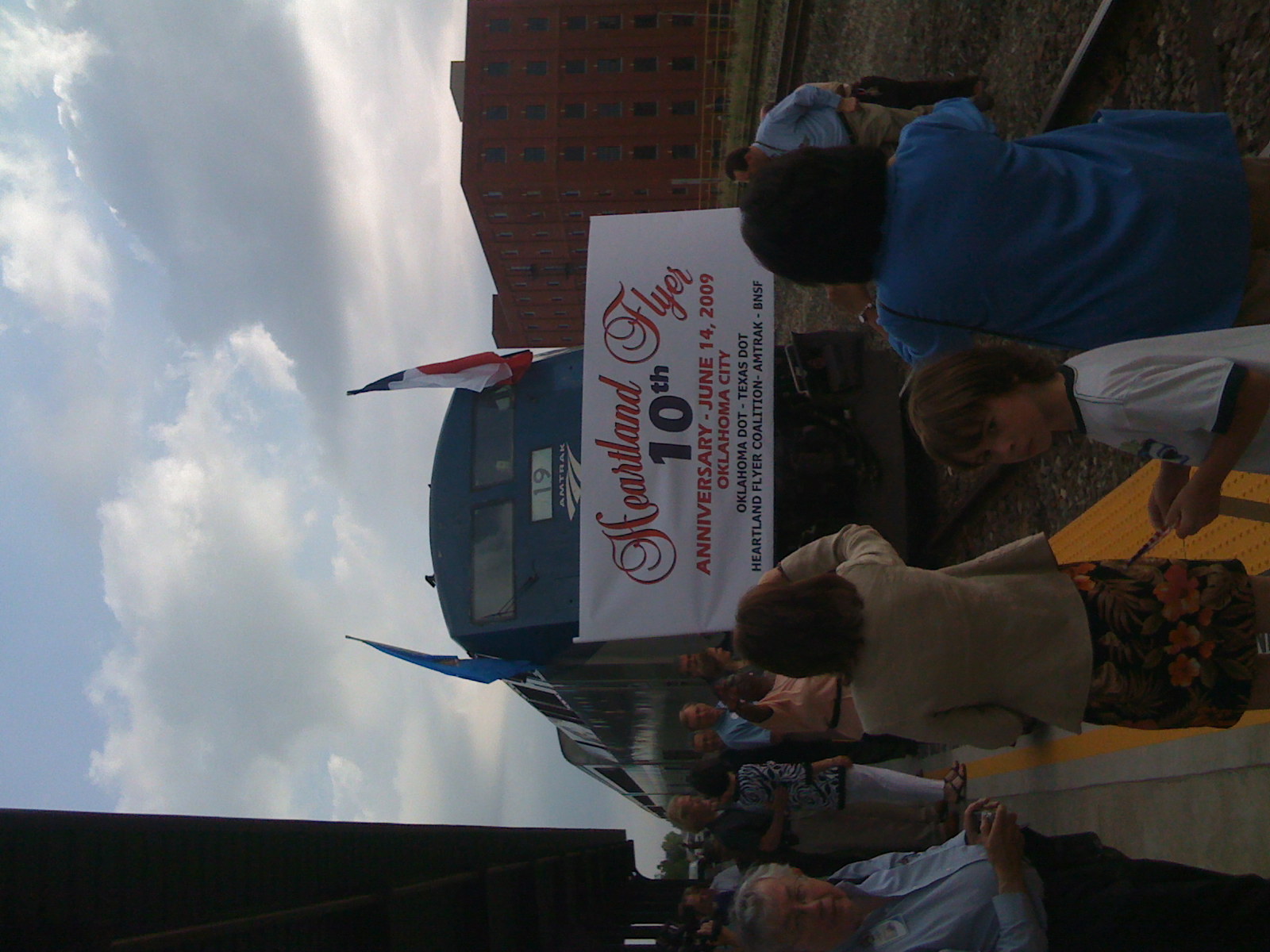 Amtrak’s Heartland Flyer train has whisked Texans and Oklahomans back and forth between the two states, providing a safe, reliable and scenic connection between Oklahoma City and Fort Worth for more than 25 years. But last year, the train came close to getting derailed when money for the popular passenger rail service was not included in the state budget.
Luckily, Dallas-Fort Worth transportation officials stepped in to help. Last summer, the Regional Transportation Council (RTC) approved a $3.5 million emergency infusion to ensure the train could keep rolling. The funding represents half the state’s biennial contribution to the route’s operations. As a route that operates only in two states, the Heartland Flyer, which has been in service since 1999, is funded jointly by Texas and Oklahoma.
The RTC funding lasts a year, meaning more action will be required to keep the train going until the Texas Legislature reconvenes, in January 2027, and has a chance to revisit the matter.
Significant growth in ridership with the addition of a second daily round trip could help bridge the gap, as the additional revenue realized would reduce the subsidy and could entice more funding partners to climb aboard. To learn more about the Heartland Flyer, including information about trips, tickets and schedules, visit Amtrak.com/heartland-flyer-train.
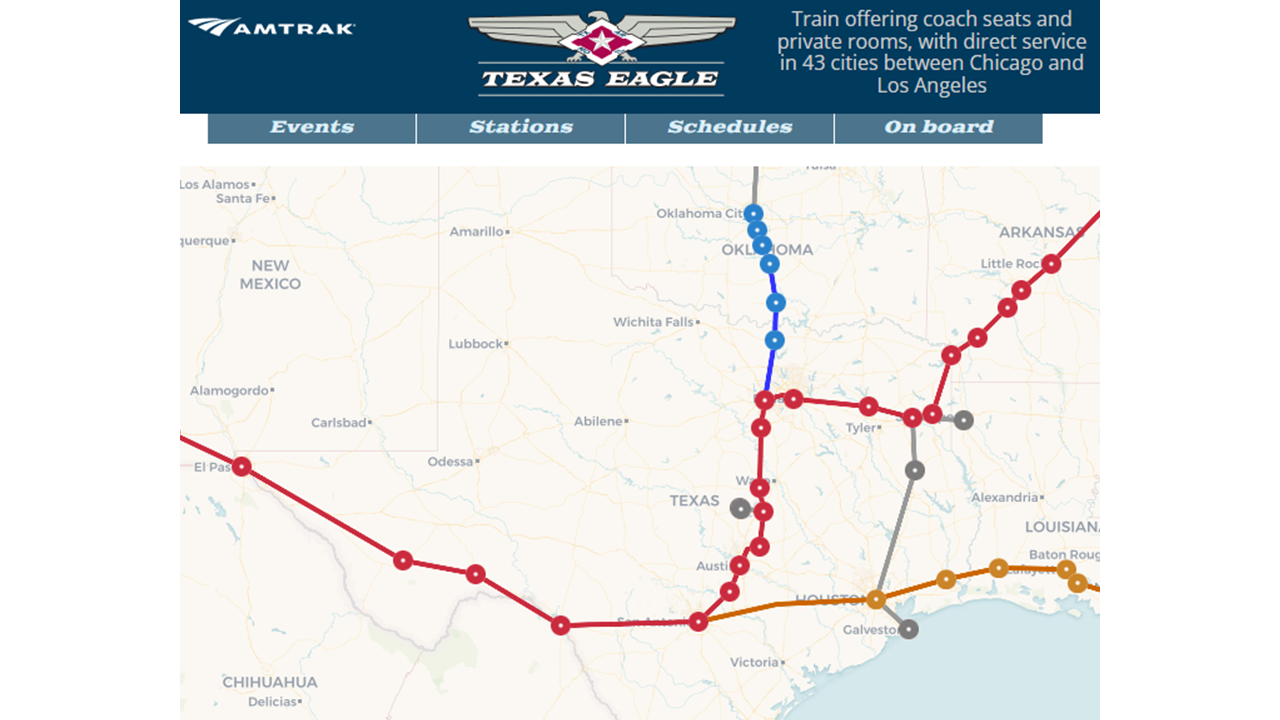 While the Heartland Flyer plays a pertinent role in regional travel, it’s also part of a larger passenger rail network that extends far beyond the Red River. Another key thread in that network is Amtrak’s Texas Eagle, a long-distance train that links Texas to the Midwest.
The Texas Eagle operates between Chicago and San Antonio, tracing a north–south path through the heart of the country. Along the way, it serves major Texas cities such as Dallas, Fort Worth and Austin, as well as smaller communities that have few other intercity travel options. For many of these towns, the Texas Eagle provides a vital connection to jobs, schools and medical care. It also offers a connection to the Sunset Limited train, which travels to popular cities such as New Orleans and Los Angeles.
The Texas Eagle is keeping a classic form of travel alive: long-distance rail. Passengers can watch the landscape change from Midwestern plains to Texas Hill Country, all from the comfort of seats and sleeping accommodations that go beyond the norm of train travel. The train uses bi-level Superliner cars, which provide spacious coach seating with reclining seats, ample legroom, tray tables, reading lights and 110-volt outlets for charging devices. For those who prefer more privacy and comfort, sleeping accommodations include roomettes, bedrooms, family bedrooms and accessible bedrooms. These private rooms come with fresh linens, towels, pillows, dedicated attendant service, complimentary meals, priority boarding and access to showers. Additionally, the recently reinstated Sightseer Lounge car offers panoramic views of the landscape zooming by, along with café service. For more information, visit amtrak.com/texas-eagle-train and also http://texaseagle.com/.
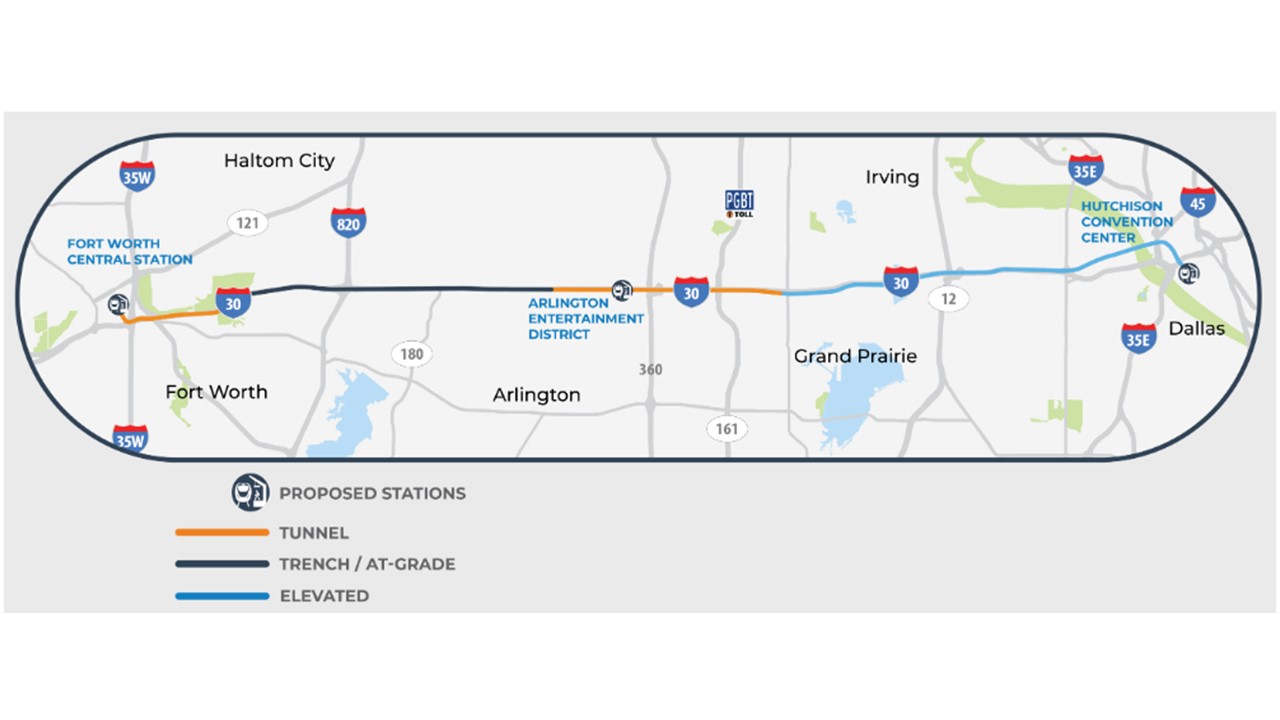 High-Speed Rail The future of intercity train travel may look substantially different. NCTCOG and federal partners are working on developing a network of high-speed rail lines that could link Dallas-Fort Worth to Houston and, eventually, other parts of the state and nation. NCTCOG continues planning for the North Texas line, which would run along Interstate Highway 30 from Fort Worth to Dallas, with a stop in Arlington, and connect to the planned Dallas-to-Houston project.
High-speed rail would be one more option for moving people from Dallas-Fort Worth to other metropolitan areas, a transportation development that could be crucial to the future, as population growth leads to increased density.
Ultimate links to San Antonio, Austin, even other metro areas outside of Texas could follow.
I-20 East Corridor In addition to the plans for the high-speed rail, the proposed I-20 Corridor represents the future-focused initiatives of North Texas and its support of the region’s intercity passenger rail systems. The corridor would connect rail service between North Texas and Atlanta through a multi-state network with direct links to Amtrak’s Texas Eagle, City of New Orleans and Crescent train routes. This initiative addresses regional issues such as highway congestion, declining air service in smaller communities and the increasing demand of reliable long-distance transportation alternatives.
The I-20 Corridor is supported by feasibility studies completed by Amtrak, TxDOT and local governments as well as multi-state coordination. It also received $1.4 million from the Federal Railroad Administration for development and operations, highlighting the future of intercity rail and regional accessibility in North Texas. For more information, please visit the Southern Rail Commission’s I-20 Corridor project webpage.
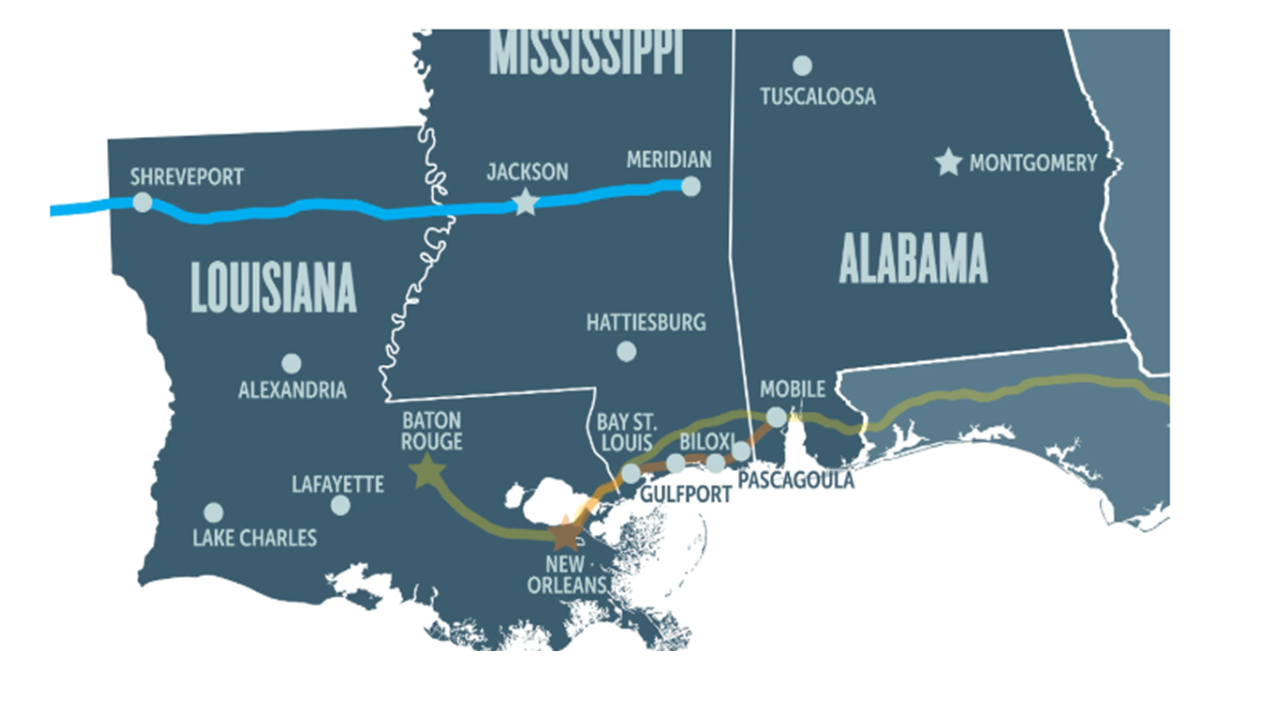
Photo and picture credits: NCTCOG, TexasEagle.com, Southern Rail Commission, Texas Rail Advocates