Rail symposium at UNT-Dallas draws students into the world of rail, moving people and goods
March 1, 2026 - TRA Newswire -
An academic rail symposium, partnered between Texas Rail Advocates and University of North Texas at Dallas, gave college students a look at potential careers within the industry, as well as focusing on issues that affect moving people and goods.
Held at the UNT-Dallas School of Business this past Friday, the one-day event featured a "Fireside Chat" live podcast with Nathan Chaney and guests, founder of Supply Chaney, a resource for the logistics community.
Chaney engaged in a lively conversation with Allan Rutter, Freight Analysis Program Manager for the Freight and Trade Division of Texas A&M Transportation Institute and Michelle Bowling, Director of Transportation and Service at Oliver Wyman.
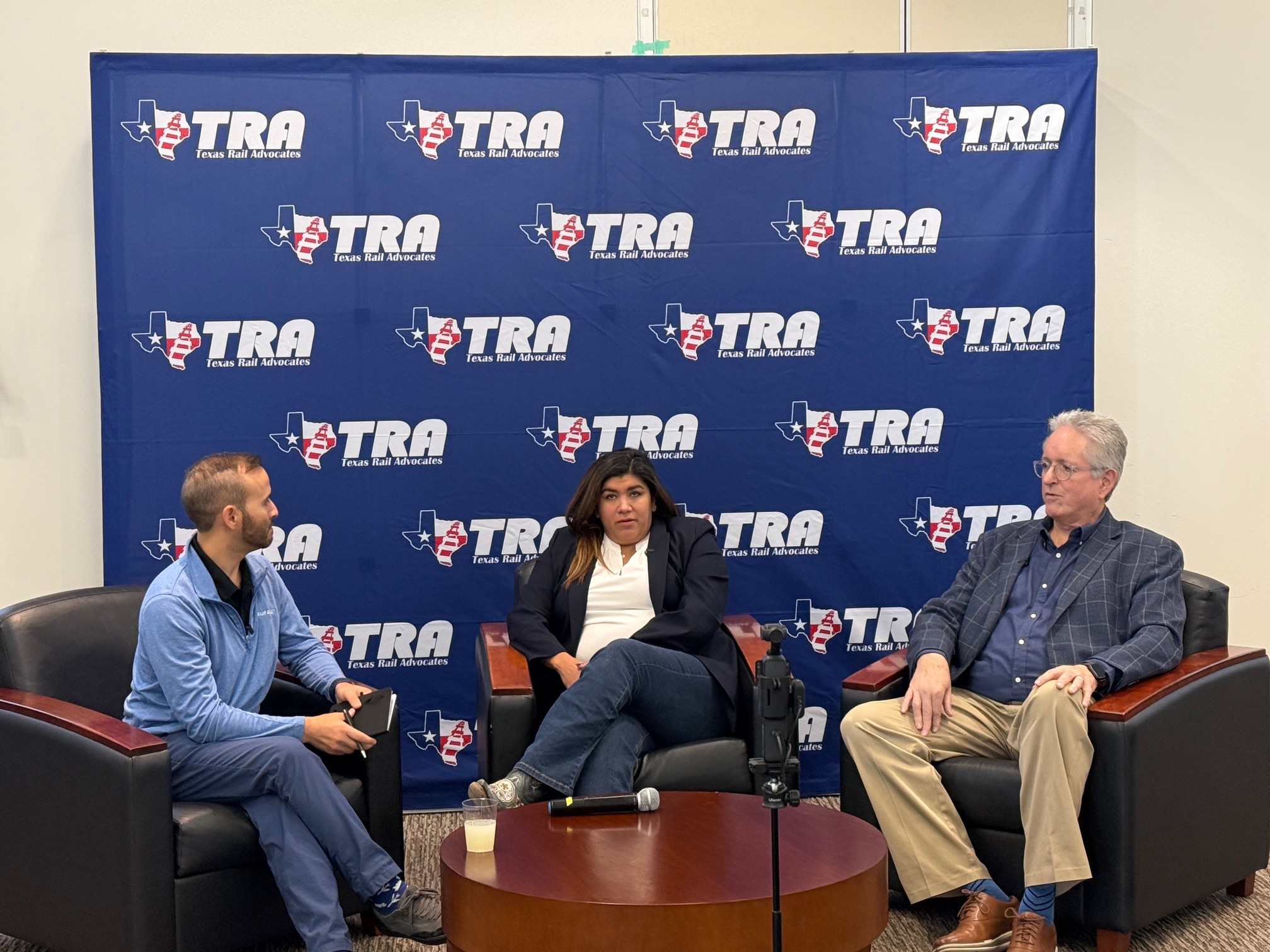 Bowling pointed out she notices a shift in shippers wanting to use rail facilities instead of trucks, but there are some obstacles to overcome. "If a shipper calls and asks about a rate to ship by rail or if they have an opportunity and don't know how to navigate through that, it can take months from a freight rail provider to get a rate," according to Bowling. "If you call a trucking company, within thirty seconds they are giving you a price. How do we make it easier to shape that demand by rail?"
Texas Transportation Institute's Rutter addressed the impending merger of Union Pacific and Norfolk Southern railroads in a broad stroke saying "we want to stay neutral but it's hard not to know that it's happening. How do those class 1 railroads work with each other while two of them are trying to do something while the other four are throwing rocks at them." Rutter asked "what does it look like when you're trying to maintain your market share and grow it at a time when so much is happening with trucks, keeping up with automation trucking trends that are at breakneck speed."
"We were honored to welcome such an engaged group of students to this inaugural event, "according to Jeffrey Wendt, DBA, Senior Lecturer, Supply Chain and Marketing Management at University of North Texas at Dallas. "Our goal was to provide insight into the trends, technologies, and career pathways shaping a safer, more efficient, sustainable, and reliable rail transportation system in the United States—and your participation helped make the day a success."
The symposium also delved into passenger rail technology and how millions of people use different trains in different ways on a daily basis.
Ian Hodkinson, Technical and Business Development Director, Transit Systems - Alstom discussed the different types of passenger rail systems which exist, the differences between them, and a macroscopic view of the main components of a rail network and how they work. Hodkinson pointed out the benefits and limitations of types of trains from people movers and light rail in mass transit, to regional, intercity and high-speed rail propulsion and technology.
Kal Silverberg, Lead Consultant, One Track Mind Consulting, LLC, gave the university students an inside look at how complex it is to determine where freight trains need to be in a rail system at the right time, with the right equipment, crews and schedules to meet customer demands. Silverberg, with over 41 years in the railroad industry, pointed out how you have to wear a number of hats to make movement decisions, including transportation, marketing, customer service, equipment and technology to make sure the rail network runs smoothly.
Philip Stach, Vice President, Director of Operations and Travis Looney, Vice-President, Director of Utility Coordination, LSW Land Services, explained how right-of-way acquisitions and well as the art of surveying and subsurface utility engineering plays an important part in railroad construction, be it building a new line or having to redesign or move existing track projects.
Peter LeCody, President of Texas Rail Advocates, gave attendees an overview on how the non-profit speaks in favor of important passenger and freight rail projects that help grow the Texas economy. "Some 15-hundred people are moving to Texas every day and they're not bringing their highways with them", said LeCody. Our lawmakers must look at statewide multi-modal plans for the future and shape policy. We do need good highways, good aviation facilities, good maritime infrastructure and other ways to move around, but let's not forget that rail is an underutilized mode that needs attention for moving people and goods."
Photo credit: Texas Rail Advocates